

Indoor Air Quality Testing in Grand Prairie, TX
Grand Prairie's year-round humidity and reliance on slab foundations create persistent moisture challenges in attics, bathrooms, and air conditioning systems where mold commonly develops. Indoor air quality testing identifies mold spores and moisture patterns before they compromise your home's air, giving you clarity on what's present and where remediation efforts should focus. Understanding your indoor air quality helps you make informed decisions about containment and removal with the local providers Goff Mold Remediation connects you to.
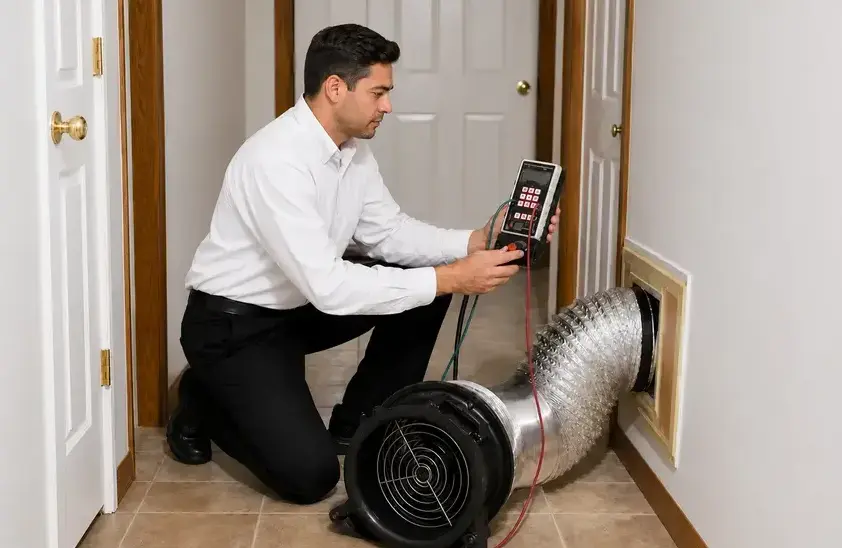
Do you need mold testing in Grand Prairie, TX?
Testing is worth paying for when it answers a question looking cannot. Below is what EPA says sampling establishes, and what it does not.
Surface sampling may be useful to determine if an area has been adequately cleaned or remediated.EPA
Sampling for mold should be conducted by professionals who have specific experience in designing mold sampling protocols, sampling methods and interpreting results.EPA
That is the honest answer to when testing is worth paying for: to find what is hidden, and to verify a clean-up. What it cannot do is produce a pass or fail, because no federal threshold exists to measure a result against — which is why no one can tell you a safe spore count.
Currently, there are no EPA regulations or standards for airborne mold contaminants.EPA
In most cases, if visible mold growth is present, sampling is unnecessary.EPA
In Grand Prairie that question comes up often for a reason: Dallas County has flood events on record in 29 separate years, and water that sat inside a wall does not announce itself.Source: NOAA Storm Events Database, Dallas County (1996-2026; Flood, Flash Flood and Coastal Flood events)
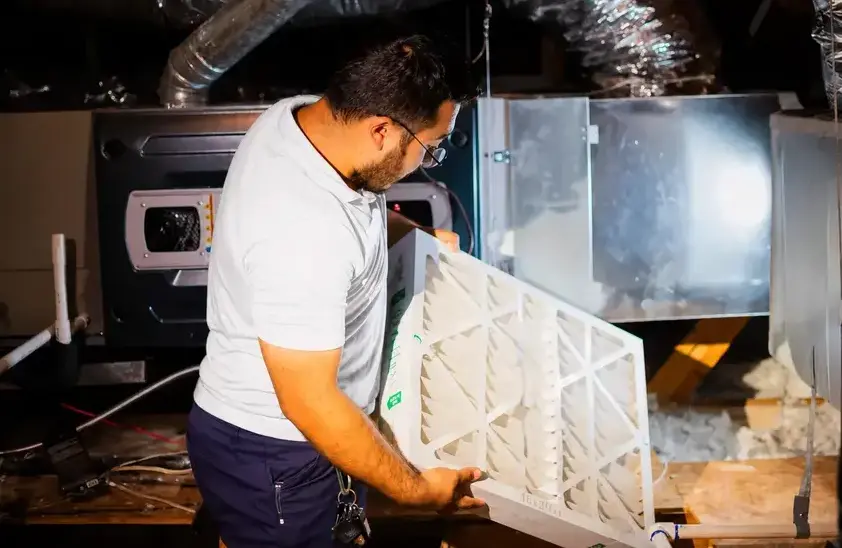
Indoor Air Quality Testing Matters in Grand Prairie
Grand Prairie's humid subtropical climate creates steady moisture pressure throughout the year, and this persistent humidity is a primary driver of indoor air quality concerns in homes across the area. When moisture accumulates in attics, bathrooms, and air conditioning systems—the spaces where condensation and dampness settle most easily—it creates conditions where mold growth becomes a realistic possibility. Property owners in Grand Prairie who notice musty odors, visible discoloration on surfaces, or changes in air quality should consider whether moisture-related issues may be affecting their indoor environment. Indoor air quality testing helps identify whether mold, excess humidity, or other airborne contaminants are present and at what levels, giving you a clear picture of what you're breathing.
Goff Mold Remediation connects Grand Prairie property owners with independent local providers who perform thorough indoor air quality testing and follow-up assessment. These providers use equipment and methods designed to detect mold spores, moisture levels, and other air quality indicators in your home or building, then explain the findings in terms you can act on. Once testing is complete and any concerns are identified, the same provider can discuss remediation options and next steps with you directly. Whether you're in neighborhoods like Greenway Trails or South Grand Prairie, reaching a responsive local professional for testing is the first step toward understanding and improving your indoor air quality.
Why Grand Prairie Property Owners Choose Goff Mold Remediation
Indoor Air Quality Testing Backed by Experience
Indoor air quality testing requires precise equipment and knowledge to identify mold spores and moisture sources accurately. Goff connects you with local providers experienced in detecting hidden contamination before it becomes a larger problem affecting your home's air.
Fast Response for Air Quality Concerns
When you suspect indoor air quality issues from mold, time matters. Goff's local provider network responds quickly to schedule indoor air quality testing, so you get answers fast and can move forward with remediation if needed.
Clear Communication Throughout Testing
Indoor air quality testing results can feel technical. Goff connects you with providers who explain findings clearly—what the test shows, where moisture is entering, and what steps make sense next—so you understand your indoor air quality status fully.
Attic and AC System Focus for North Texas Humidity
North Texas humidity runs high year-round, keeping moisture pressure on homes steady. In Grand Prairie, attics and air conditioning systems face constant moisture exposure. Indoor air quality testing pinpoints these common trouble spots before mold takes hold.
How Our Indoor Air Quality Testing Process Works
Schedule Your Indoor Air Quality Testing Visit
Contact Goff Mold Remediation to arrange an indoor air quality testing appointment with a local provider in Grand Prairie. The provider will discuss your concerns, schedule a convenient time, and prepare to assess air quality and moisture conditions throughout your property.
Complete Indoor Air Quality Testing Assessment
The independent provider conducts thorough indoor air quality testing, examining areas where moisture commonly accumulates—including attics, bathrooms, and HVAC systems—given North Texas's year-round humidity levels. Testing identifies airborne mold spores, moisture levels, and air quality issues to pinpoint contamination sources.
Receive Testing Results and Remediation Plan
You receive a detailed indoor air quality testing report with findings and recommended remediation steps. The local provider outlines how to address identified issues and improve air quality, then coordinates next steps to restore a healthier indoor environment.
Dealing with Indoor Air Quality Testing in Grand Prairie? Get fast, professional help.
Call Now — (972) 449-9488Indoor Air Quality Testing Across Grand Prairie
Grand Prairie's humid subtropical climate creates year-round moisture pressure on homes, making indoor air quality testing an important step in identifying mold growth before it affects your property and the people inside it. The region's consistently elevated humidity levels—well beyond seasonal storm patterns—keep attics, bathrooms, and air conditioning systems vulnerable to mold development. Since most Grand Prairie homes sit on slab foundations due to the area's expansive clay soil, moisture management in these specific zones becomes critical to maintaining healthy indoor air.
Whether your home is in an established neighborhood like Greenway Trails or a newer section of the community, the combination of climate moisture and the mechanical systems that cool and dehumidify your home means indoor air quality testing can reveal mold or moisture issues that aren't always visible. A local mold inspection provider can assess your property's specific vulnerabilities, test air quality for spore levels, and help you understand what remediation steps make sense for your situation. This proactive approach protects both your home's structure and the air your family or employees breathe every day.
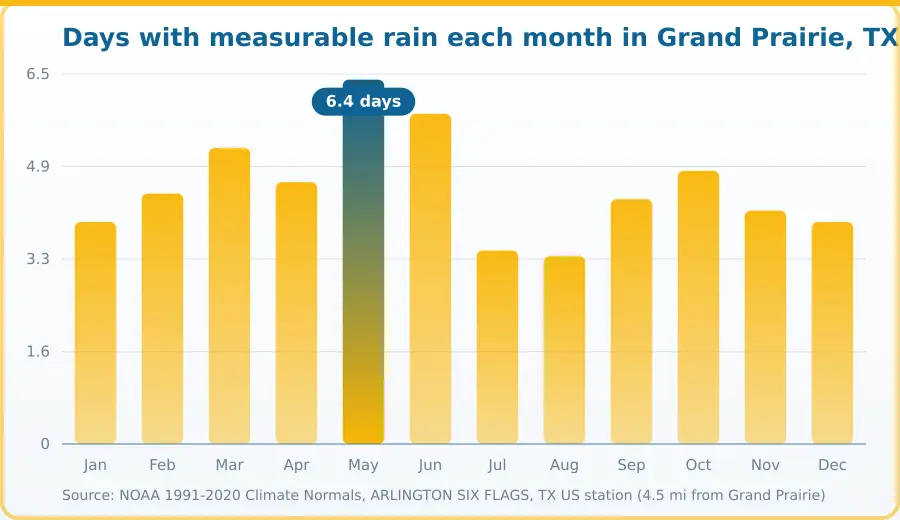
| Period | Days with measurable rain by month (days) |
|---|---|
| Jan | 3.9 |
| Feb | 4.4 |
| Mar | 5.2 |
| Apr | 4.6 |
| May | 6.4 |
| Jun | 5.8 |
| Jul | 3.4 |
| Aug | 3.3 |
| Sep | 4.3 |
| Oct | 4.8 |
| Nov | 4.1 |
| Dec | 3.9 |
Source: NOAA 1991-2020 Climate Normals, ARLINGTON SIX FLAGS, TX US station (4.5 mi from Grand Prairie). Retrieved October 27, 2026.
Year-Round Indoor Air Quality Testing for Grand Prairie Homes
Spring: Rising Humidity Concerns
Spring rainfall increases indoor moisture levels, creating conditions where mold spores become more active indoors. Indoor air quality testing detects elevated spore counts and humidity imbalances before they settle into attics, bathrooms, and AC systems. Goff Mold Remediation connects you with local providers who assess your home's air quality and recommend targeted remediation.
Summer: Heat and Condensation
Summer cooling cycles create temperature swings between AC-chilled interiors and outdoor heat, causing condensation in poorly ventilated spaces. Indoor air quality testing reveals moisture accumulation and mold colonization in these hidden zones. Local providers accessible through Goff help identify problem areas before summer humidity peaks.
Fall: Seasonal Moisture Shifts
Fall temperature drops can trap moisture inside homes, particularly in areas like Greenway Trails and Prairie Ridge where HVAC systems cycle frequently. Indoor air quality testing measures particulates and moisture levels as seasonal transitions occur. Goff Mold Remediation links you with independent providers who perform fall inspections to prevent winter mold complications.
Winter: Constant Humidity Pressure
North Texas's humid subtropical climate maintains elevated indoor humidity year-round, even during cooler months, keeping moisture pressure constant on slab-foundation homes where attics and AC systems are primary moisture collection points. Indoor air quality testing quantifies this persistent humidity exposure and identifies where mold growth concentrates during winter dormancy. Goff Mold Remediation connects property owners with local providers who conduct thorough winter testing and removal before spring activity accelerates.
Related Services
Indoor Air Quality Testing FAQs — Grand Prairie, TX
Indoor Air Quality Testing measures airborne contaminants—including mold spores, dust, allergens, and other particles—inside your home. A local provider will collect air samples from different rooms, often comparing indoor levels to outdoor baselines. Results help identify whether mold or other air quality issues are present and guide next steps for remediation if needed.
Goff Mold Remediation connects you with independent local providers in Grand Prairie who can typically schedule Indoor Air Quality Testing within a few days. Once you reach out, Goff matches you with a nearby provider ready to assess your home's air quality and explain what the results mean for your property.
The number of rooms tested, the types of contaminants screened, and whether follow-up testing is needed all influence pricing. Independent providers in Grand Prairie set their own rates based on the scope of work. Goff connects you with local providers so you can discuss testing needs and pricing directly before any work begins.
Before testing, close windows and doors for at least 12 hours to create a stable indoor environment. Keep HVAC systems running normally—don't adjust them right before the visit. Let your provider know about any ongoing moisture concerns, recent water damage, or areas where you've noticed musty odors. This context helps them focus sampling where problems are most likely.
Maintain steady humidity levels by using air conditioning and dehumidifiers, especially in bathrooms and other high-moisture areas. Keep HVAC filters clean and replace them regularly. Ensure attics, crawl spaces, and AC systems have good airflow and drainage. Address any leaks or water intrusion promptly. These steps help reduce the conditions that allow indoor air quality problems to develop or return.
Yes. Grand Prairie experiences elevated humidity throughout much of the year, not just seasonally, which creates ongoing moisture pressure on homes. This persistent humidity is why attics, bathrooms, and AC systems are common trouble spots for mold growth. Indoor Air Quality Testing can confirm whether your home's air is being affected, making it a valuable tool any time you suspect moisture or mold concerns.
Homeowner Safety Toolkit
Verify Your Grand Prairie, TX Mold Remediation Company
Before you hire anyone, use these independent national resources to confirm credentials, standards, and track record.
ACAC
An independently accredited certifying body for mold inspectors and consultants — one of the few in this field whose standards are verified by an outside accreditation board, not just self-declared.
Find a Certified InspectorBBB
Look up any mold remediation company's complaint history, customer reviews, and accreditation status — a free, independent check before you hire.
Check StandingCDC
Covers the health effects of mold exposure and safe cleanup practices, separate from the remediation work itself — useful if anyone in the home has respiratory symptoms.
Mold Health GuideDealing with Indoor Air Quality Testing in Grand Prairie, TX? Call (972) 449-9488 for 24/7 help.
Call Now — (972) 449-9488Areas We Serve in Grand Prairie, Texas

Coverage centres on Grand Prairie, TX and reaches 8 surrounding communities. Response time is what matters most in the hours after a problem is found, so knowing the ground is part of the job.
Grand Prairie, TX Information
Wedged neatly between Dallas and Fort Worth, Grand Prairie has built its own identity out of that in-between address. Roughly 196,100 people call it home, and the city's economy runs on a sturdy mix of aerospace and defense work, with Lockheed Martin and Raytheon Technologies anchoring a manufacturing base that's been around long enough to matter. Add in a growing logistics and distribution scene, plus retail and construction keeping pace with the Metroplex's expansion, and you get a city that stays busy without losing its footing.
Grand Prairie also knows how to have fun: Lone Star Park and Epic Waters Indoor Waterpark draw visitors well beyond city lines. Neighborhoods like Lynn Creek and South Grand Prairie reflect a community that's practical, welcoming, and quietly proud of its place in North Texas.

Photo: Billy Hathorn, CC BY-SA 3.0