

Mold Removal Cost in Grand Prairie, TX
North Texas humidity and seasonal moisture patterns mean Grand Prairie homes face consistent indoor moisture pressure, particularly in attics, bathrooms, and around air conditioning systems where mold commonly develops. Mold removal cost depends entirely on how much area is affected, which building materials must be removed or treated, whether containment and air filtration equipment is necessary during the work, and whether structural rebuild follows once remediation is complete. Early inspection and prompt action typically keep the scope of removal smaller, which directly affects the total cost a local provider will quote after assessing the damage.
Understanding Mold Removal Cost in Grand Prairie, TX
Property owners in Grand Prairie face persistent moisture challenges throughout much of the year, driven by the region's humid subtropical climate and the rainfall patterns common to North Texas. These conditions create steady pressure for moisture to enter homes—through attics during seasonal storms, in bathrooms where ventilation may lag, and in air conditioning systems that cycle constantly. Understanding what mold removal will cost before you hire someone is essential because the scope of work is never the same from one property to another. The cost depends entirely on what the inspection reveals: how much area is affected, which building materials harbor the mold, whether containment equipment and air scrubbing is necessary during the work, and what post-remediation steps are needed to confirm the mold is gone. Acting quickly when you first notice signs of mold generally keeps the affected area smaller, which in turn keeps the scope—and therefore the cost—from expanding.
Goff Mold Remediation connects Grand Prairie property owners with independent local mold inspection and remediation providers who inspect your property first and explain the removal cost based on what they find, not on guesswork or a template. A provider will assess the square footage involved, identify which materials need to be removed or treated, determine whether specialized equipment and containment are required for safety, and discuss whether post-remediation clearance testing makes sense for your situation. This inspection-first approach means you understand the cost and the work scope before any commitment, so you can make an informed decision about moving forward with remediation.
Understanding Mold Removal Cost in Grand Prairie
How Affected Area Size Drives Cost
The square footage of mold-affected surfaces directly shapes the scope of removal work. Larger affected areas require more labor, containment materials, and disposal. A small bathroom corner costs less to address than mold spanning an attic or multiple rooms.
Materials Involved in the Work
Different materials require different removal approaches, affecting labor and cost. Mold on drywall may require removal and replacement; carpet or insulation may need extraction; HVAC components demand specialized cleaning. Structural materials like wood framing add complexity and work scope.
Containment and Air Quality Equipment
Controlling mold spore spread during remediation often requires containment barriers, negative air pressure systems, and air scrubbers. Larger jobs or heavily contaminated areas demand more equipment and longer run times, increasing the total scope and cost of the project.
North Texas Humidity and Indoor Moisture Patterns
The region's humid subtropical climate keeps moisture pressure on homes year-round. Attics, bathrooms, and air conditioning systems are common trouble spots here. Acting quickly when mold is first discovered helps prevent it from spreading deeper into walls or structural areas, which keeps remediation scope manageable.
How Your Mold Removal Cost Is Estimated in Grand Prairie, TX
Request an On-Site Estimate
Contact a local mold removal provider through Goff to schedule an inspection of the affected area in your Grand Prairie home. The provider will assess which materials are involved—drywall, carpet, insulation, HVAC components, or structural elements—to determine the scope and therefore the cost of removal.
Receive a Detailed Scope Assessment
The independent provider inspects the square footage affected, identifies moisture sources, and determines whether containment equipment, air scrubbing, post-remediation clearance testing, or structural rebuild will be necessary. Each of these factors directly drives the mold removal cost for your property.
Review the Estimate Before Work Begins
You receive a detailed estimate breaking down what removal work is required, what equipment and testing are included, and the total cost. You decide whether to approve the scope before any mold removal work starts, so there are no surprises.
Wondering about Mold Removal Cost in Grand Prairie? Get an on-site estimate from a local provider.
Call Now — (972) 449-9488What Affects Mold Removal Cost in Grand Prairie
The cost of mold removal in Grand Prairie depends on how much of your home is affected and what materials the mold has colonized. A small area of mold growth on drywall in a bathroom costs less to remove than mold that has spread through insulation, HVAC ductwork, or multiple rooms. The North Texas climate keeps humidity levels elevated year-round, which means moisture can persist in attics, air conditioning systems, and bathrooms long after visible water intrusion stops. The longer mold grows undetected, the more materials it damages—drywall may need replacement, insulation may require removal and disposal, and ductwork may need cleaning or component replacement. All of these factors increase the scope of work and therefore the cost.
Your home's construction also influences removal costs. Many Grand Prairie properties sit on slab foundations, which means crawlspaces and basements are uncommon; instead, attics and HVAC systems are where moisture problems typically develop and mold takes hold. Older homes in established neighborhoods may have more hidden cavities and outdated ventilation, which can allow mold to spread out of sight before discovery. Once mold is removed, the provider may recommend post-remediation clearance testing to confirm the space is safe, and any structural rebuild—replacing damaged framing, drywall, or flooring—adds to the final cost. Acting quickly when you suspect mold growth usually keeps the affected area smaller and the remediation work more contained, which directly affects what you will pay.
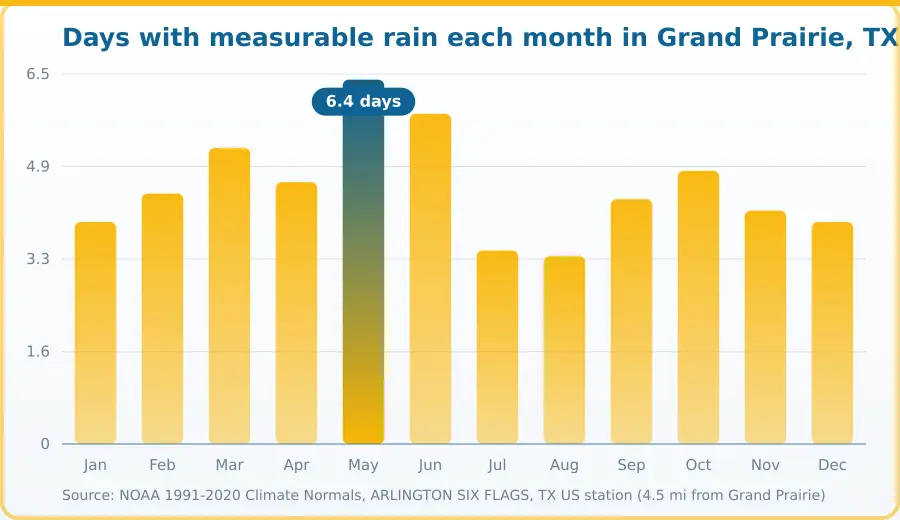
| Period | Days with measurable rain by month (days) |
|---|---|
| Jan | 3.9 |
| Feb | 4.4 |
| Mar | 5.2 |
| Apr | 4.6 |
| May | 6.4 |
| Jun | 5.8 |
| Jul | 3.4 |
| Aug | 3.3 |
| Sep | 4.3 |
| Oct | 4.8 |
| Nov | 4.1 |
| Dec | 3.9 |
Source: NOAA 1991-2020 Climate Normals, ARLINGTON SIX FLAGS, TX US station (4.5 mi from Grand Prairie). Retrieved October 27, 2026.
How Grand Prairie's Seasons Shape Mold Removal Cost
Spring: Storm Moisture
Spring thunderstorms bring heavy rainfall and humidity spikes across North Texas. Water intrusion through roofs, walls, and foundations can expand the area requiring remediation. The larger the affected zone—whether it spans drywall, insulation, or HVAC components—the greater the scope and cost of removal.
Summer: Heat and AC Strain
Summer heat intensifies air-conditioning system use. Condensation buildup, clogged drain lines, and refrigerant leaks create persistent moisture in attics and ductwork where mold thrives in Grand Prairie's humid subtropical climate. Remediation of HVAC components and surrounding materials typically drives higher costs than surface-only removal.
Fall: Attic Vulnerability
As temperatures cool, attics—already common mold sites in homes built on slab foundations—become prone to moisture trapped by poor ventilation and roof leaks. Addressing mold in attic framing, insulation, and structural wood requires containment, specialized equipment, and sometimes rebuild work, substantially increasing removal cost.
Winter: Condensation and Leaks
Winter cold creates temperature differences that drive condensation in bathrooms, crawlspaces, and around poorly sealed windows. Roof leaks from ice dams and frozen gutters introduce water into wall cavities and attics. Early detection and swift remediation limit moisture spread; delay allows mold to colonize more materials, expanding cost and work scope.
Related Services
Mold Removal Cost FAQs — Grand Prairie, TX
The cost depends primarily on how much area is affected, what materials harbor the mold, and how much containment or structural repair is needed. A small spot in drywall costs far less than mold spread across attic framing or insulation. The local inspection determines the exact scope, which drives the price the independent provider quotes.
Early detection and removal prevent mold from spreading deeper into walls, framing, or insulation. When mold grows unchecked, it damages more materials and requires more extensive remediation. The sooner you call for an inspection, the smaller the affected area is likely to be, keeping the overall cost lower.
An independent local provider will inspect your property in person to assess the size, location, and extent of mold damage. They examine affected materials and any structural or moisture issues. Based on that on-site inspection, they provide an estimate for the specific work needed to safely remove and remediate the mold.
Insurance coverage for mold removal varies by policy and cause. If mold results from a covered event like sudden water damage, your policy may help with costs. Contact your insurer directly to understand your coverage. The independent provider can often discuss this with you, but the insurer makes the final decision.
Goff Mold Remediation connects Grand Prairie property owners with independent local providers for on-site estimates. The goal is a fast connection so you can get an inspection and cost assessment without delay. Contact us to start the process and receive a quote from a local provider near you.
North Texas experiences sustained humidity throughout much of the year, which keeps moisture pressure on homes steady. Attics, bathrooms, and air conditioning systems are particularly vulnerable in this climate. Homes with existing moisture problems often require larger remediation efforts, which can increase the overall cost compared to isolated mold spots.
Homeowner Safety Toolkit
Verify Your Grand Prairie, TX Mold Remediation Company
Before you hire anyone, use these independent national resources to confirm credentials, standards, and track record.
ACAC
An independently accredited certifying body for mold inspectors and consultants — one of the few in this field whose standards are verified by an outside accreditation board, not just self-declared.
Find a Certified InspectorBBB
Look up any mold remediation company's complaint history, customer reviews, and accreditation status — a free, independent check before you hire.
Check StandingCDC
Covers the health effects of mold exposure and safe cleanup practices, separate from the remediation work itself — useful if anyone in the home has respiratory symptoms.
Mold Health GuideQuestions about Mold Removal Cost in Grand Prairie, TX? Call (972) 449-9488 to arrange a local on-site estimate.
Call Now — (972) 449-9488Areas We Serve in Grand Prairie, Texas
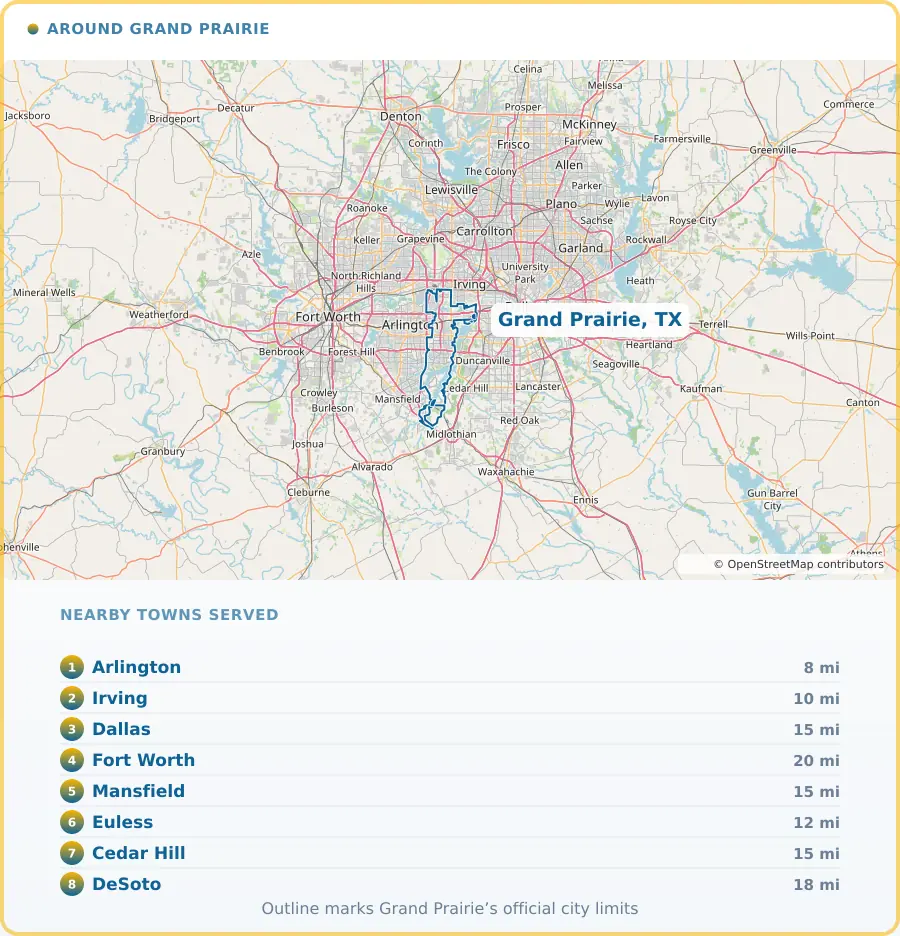
Coverage centres on Grand Prairie, TX and reaches 8 surrounding communities. Response time is what matters most in the hours after a problem is found, so knowing the ground is part of the job.
Grand Prairie, TX Information
Wedged neatly between Dallas and Fort Worth, Grand Prairie has built its own identity out of that in-between address. Roughly 196,100 people call it home, and the city's economy runs on a sturdy mix of aerospace and defense work, with Lockheed Martin and Raytheon Technologies anchoring a manufacturing base that's been around long enough to matter. Add in a growing logistics and distribution scene, plus retail and construction keeping pace with the Metroplex's expansion, and you get a city that stays busy without losing its footing.
Grand Prairie also knows how to have fun: Lone Star Park and Epic Waters Indoor Waterpark draw visitors well beyond city lines. Neighborhoods like Lynn Creek and South Grand Prairie reflect a community that's practical, welcoming, and quietly proud of its place in North Texas.
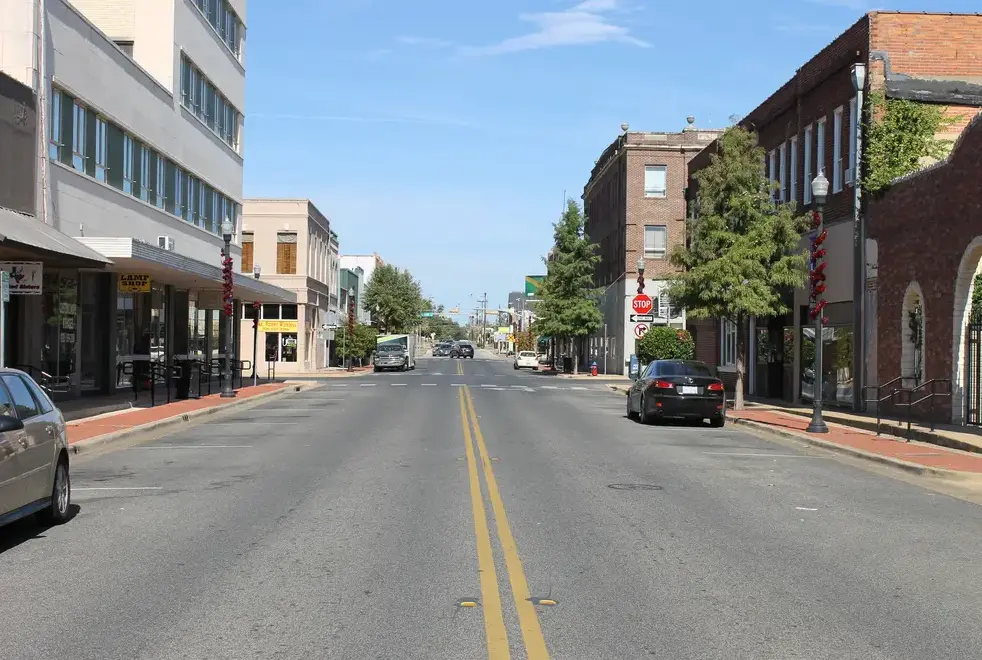
Photo: Billy Hathorn, CC BY-SA 3.0